Get Familiar: Hans Van Der Leeuw
-
Get Familiar
-
Get Familiar

"For me, the portrait is a theatrical play with eyes, nose, mouth, and the light as principal actors. Comedy or drama, equally interesting. I feel that in essence, every portrait is a self-portrait too, I don't want to please nor do I aim at merely creating a realistic representation. I like to capture the moment and preferably paint more than one portrait of a subject, nobody is just one person."
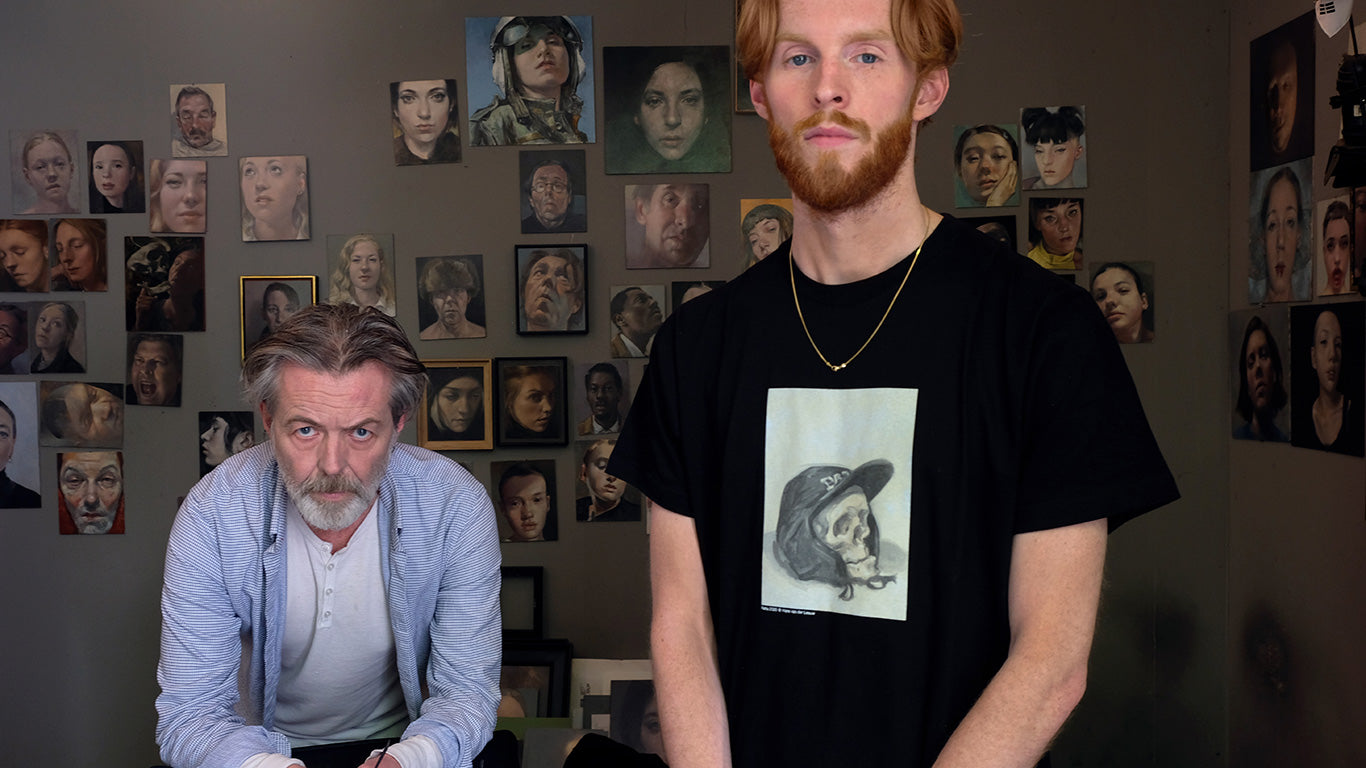
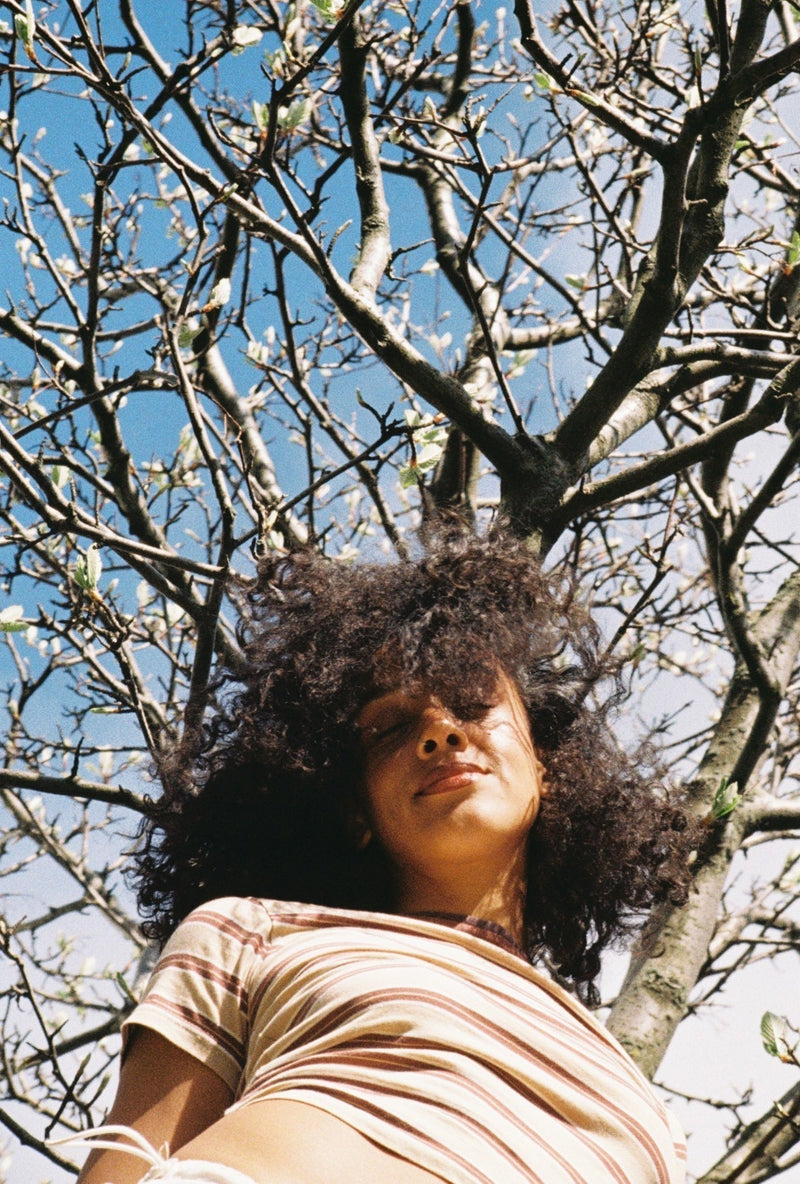
This quote by the creator of this season's Painted Skull graphic, Hans van der Leeuw sums up how he approaches every brushstroke of his oil-paint portraits, emphasising on interaction rather than interpretation. While he usually portrays living beings, the graphic he created for Patta depicts someone who has moved on to the afterlife. The Patta Painted Skull graphic is featured on two styles this season, a T-Shirt and Hooded Sweater, worn here by Hans' son, David, and shot by his daughter-in-law, Sarah. Read on to get to know more about Hans.
Hans, who are you and how would you describe your art?I have strong roots in conceptual painting but now I simply paint people, more importantly I paint what binds us together as human beings.
What messages are you trying to convey to your audience through your art?
My portrait painting is driven by the need to understand and to communicate the ‘human stuff’, the things we all know in our hearts. We basically haven’t changed all that much, and deep inside we’re not fashionable, most people find that out later in life if they do at all. The Art World is driven by an insatiable appetite for the New, the Latest, the Revolutionary, the Shocking. Portrait painting basically is all about ‘us’, maybe not the most exciting thing but hopefully recognisable, timeless and true.
How did your relationship with art begin?
I’ve always drawn and painted, not because it’s a career but because it’s life.

Please explain your creative process as it pertains to this skull painting.
Many people ask me to do process videos, my usual answer is that I don’t have a process. I have to reinvent the wheel almost every time I start something new.
How then did this collaboration come to be?
Painting and drawing skulls is basic practice and fun to do, even more fun if you try to give the skull personality, you can’t dress the skull in an expensive Italian suit but you can give it glasses or of course a cap, since I’ve always felt a connection to Patta through my son David it was a logical choice.
Can you tell us a little about your son and your relationship?
I’m very proud of him and love him always.
He is a DJ/producer, do you feel you had any hand in his career path? How so?
Haha, in a literal sense, yes. They started in his bedroom, I forced them to take themselves more seriously and told them to get out and find a studio space... they found one in Luigi’s basement.
Do you see many similarities between his generation and yours?
Absolutely, but I realize that it might be because we’re in the same little corner of the world, outside of that I don’t know shit.
What is the hardest part of being an artist? What is the most rewarding?
Modern art offers critics a chance to write long articles on hidden meaning and relevance while portrait painting doesn’t. As a result it is often not taken seriously by the more interesting galleries. There’s a shift happening that I’m happy with, social media is creating opportunities for creatives of all sorts to bypass the traditional markets. The most rewarding for me is to make something worthwhile, the next best is when someone agrees enough to want to buy it.

Are you currently in isolation? What are your main takeaways from it?
For a painter like me isolation is not that different, being alone in my studio is my favourite thing.
Has it influenced your creativity in any way?
I’m currently working on a small series of “isolation selfies”, portraits based on pics sent to me by people that follow me on Instagram - instagram.com/hansvanderleeuw - the accompanying stories have given me an extra sense of realness, it’s about people, not just about faces, good to be reminded every once in a while.
What was it like participating in a photoshoot while self-isolating?
No problem, we share the same studio apartment anyway.
The Painted Skull T-shirts and Hooded Sweats are now available in-store at Patta Amsterdam and online here.
Related Articles
-
Interview by Passion Dzenga | Photography by Ben DrameBefore Narco Polo was running up 101Barz, Range Rover freestyles and New Balance campaigns, he was a kid in a small town near Nijmegen, staring at a Dangerous-era Michael Jackson CD like it was a portal. From there it was hand-me-down Wu-Tang and 2Pac discs, scratched Green Day and Offspring albums, LimeWire folders full of East Coast, West Coast and French rap – the kind of informal education you only get from older brothers, neighbour kids and hours spent skating and playing video games with a Discman in your backpack.That DIY school of hip-hop still lives in his music today: soulful, underground and wordplay-heavy, somewhere between golden-era boom bap and the trap that later reshaped his taste. He taught himself to produce on cracked software in a student room, found his first audience freestyling in a Nijmegen sneaker shop, and built out a world with the Alle$ Lifestyle collective before moving to Amsterdam to take things further.Now, Narco Polo is one of the voices quietly reshaping Dutch rap from the inside – through jazz-flecked tapes with Styn, brutally honest car sessions filmed in his own Rover, and lyrics that read like pages from a private journal. Between four kids, two companies, meditation retreats, his own headline shows and support acts for International stars and Dutch OGs, he’s still obsessed with the same thing that grabbed him as a teenager: making music that feels real, lasts longer than the algorithm, and pushes Dutch hip-hop into a lane it hasn’t fully claimed yet.How did the first spark to get involved in music come to you?I grew up surrounded by CDs and a little home stereo. One day I found a Michael Jackson CD – I think it was Dangerous. The cover alone blew my mind, so I put it on… and then listened to that album every day after school for months.From there, my big brother was a huge influence. We were inline skating, doing stunts, and he’d always play Green Day, The Offspring – that kind of stuff. Later, he came home with a Wu-Tang CD and a 2Pac CD. That was my first real hip-hop experience. From then on, I never looked back. I even had the Wu-Tang logo on my wall, wore Wu-Tang clothes, bought the PlayStation game… I was deep in it.When LimeWire and torrents came in, it was over. I found this one Blogspot where hip-hop from all over the world was listed – East Coast, West Coast, UK, France, everything. I’d just download and dig. A friend’s older brother was also a hip-hop album collector, so whenever we were skating or gaming at his house, we’d be listening to CDs. That was my real “digging in the crates” era.Was that Michael Jackson CD from your brother or your parents?It was from my parents. My dad was a fan of George Michael and U2. My mother was more into Otis Redding, Marvin Gaye – she’s a soul fan. They had a lot of wedding and party classics. So I had tastemakers all around me: parents, brother, neighbourhood kids. Once I got on the internet and torrents, I could finally explore my own taste deeper instead of just following theirs.Where did you grow up, and what was your environment like?I’m from the south of the Netherlands, around Nijmegen – small town energy. I was hanging out with kids from the neighbourhood, skating, sharing music, playing PlayStation. That mix of skating culture and hip-hop really shaped me.Did you ever take formal music lessons? When did you first actively start making music yourself?I never took music lessons. The first real step into making music came when I moved out and had a roommate who made dubstep in Reason. I loved how the software looked – like a game – so I asked him to share it.Back in my own room, I started messing around with samples and loops. I downloaded a huge library pack, like 5–6GB, and just started making beats in Reason. I was about 20–21, so I started relatively late.Did you start by making dance music like your roommate, or something else?Nah, I didn’t really f*** with dubstep like that. I just liked the software. From day one I was chopping and making hip-hop beats. Wu-Tang and that raw sound were my starting point.What did those early beats sound like?Very raw, underground hip-hop – heavily influenced by Wu-Tang and that 90s aesthetic. Over time it got a bit more soulful. Later, when we linked up with Samuel Kareem, the sound shifted more into trap.Sam is a crazy producer, 50 times better than I was at the time. It was almost demotivating – I’d have a session with him, go home, open my laptop and realise I couldn’t do what he did. So I stopped producing for a while and focused on rapping, while he handled production. That’s when I really moved from classic hip-hop into trap. Nowadays I’m back in a place between soulful, underground hip-hop and trap – closer to what I grew up with.How did you go from making beats in your room to taking music seriously?I started working at a sneaker shop in Nijmegen. There I met Nico, who was always freestyling. He’d rap on my beats in the shop. Eventually I started writing verses too, and we’d spit while customers were walking in and out. People vibed with it, and that gave me motivation to make more beats and write more.Aki also worked at the sneaker shop. He was already an MC at dubstep/EDM parties. The city of Nijmegen organised a workshop: producers and artists got paired up with bigger names for six to eight months. We’d learn, make beats and write songs, and at the end we’d put out an album and perform at the city’s big summer festival.I produced two beats for that project and DJ’d the live show. On the festival day, the act before us had almost no crowd. We went on, played the first track – and within minutes the venue was packed. That feeling told us, “OK, people f*** with this. We have to do something with it.”After that we built our own studio, started making music every day, and eventually linked up with Sam. That’s when Alle$ Lifestyle was born.What is Alle$ Lifestyle, and what is it now?Alle$ Lifestyle started as a group of friends who love making music – hip-hop at the core, but really all genres because Sam can produce anything. It’s a collective of brothers and sisters who are creative and support each other.At some point it became more business-like, but now it’s returned to being a creative collective again, which I love. It’s about supporting each other’s art, not just the business side.You mentioned moving to Amsterdam. Why was that important?At some point we realised we’d done what we could from Nijmegen. The scene, the industry, the infrastructure – it’s all much bigger in Amsterdam. So we moved one by one. From there we started releasing more consistently, met people like Rimon, and the whole Alle$ Lifestyle universe really expanded. That’s also when I started releasing solo as Narco Polo.How would you describe the Narco Polo sound?Soulful, underground hip-hop. Warm, but with a dark, streetwise edge. Wordplay-heavy, influenced by jazzy and boom-bap textures but done in a modern way. I lean heavily toward American hip-hop. There was a period where I listened to a lot of Dutch hip-hop, but mainly an older era. Before and after that, it’s mostly US stuff for me – that’s always been my biggest influence.Do you feel that “classical” hip-hop sound is well represented in the Netherlands?Not really. There are a few people doing it, but it’s either very underground or very pure boom-bap. I’m trying to find a middle ground – something rooted in that golden era, but still current and accessible.I feel like I’m laying some groundwork. If there were more Dutch artists making exactly what I love, I’d be listening to them all the time.What draws you specifically to that jazzy, soulful, golden-era sound?It’s what I grew up on. When LimeWire arrived and I could really dig, I discovered a lot of jazzy hip-hop. That was my soundtrack for everything—being outside, skating, playing PlayStation.We went from Discman to Walkman to MP3 player, and I was always collecting new tracks. Trap only arrived later – with Chief Keef, Young Thug, Kodak, Future… I love that too, but the foundation is jazzy, underground hip-hop. That’s why it still lives under everything I do.What is a typical studio session like for you?It can start anywhere. Sometimes I come in with verses already written and we work around that. Sometimes the producer plays beats and I catch a vibe.With Sam, it often went like this: he’d start building something from scratch, I’d react in real time – “keep that,” “loop this,” “add drums like this.” Sometimes I’d mumble melodies or flows first, then write the actual words later.Right now life is busier – shows, family, our agency, campaigns – so I often need to block out time, go on a writing camp, or spend 2–3 days straight in the studio. Before it was more spontaneous; now I have to create space for the flow.How important is collaboration to your creative process?Very important. I love working with producers who “think with me” – like Aki, Sam Kareem, Styn, WillyMakeAMillie. We all add something: one comes with beats, another with melodies, I bring verses, and we help each other refine everything.With Styn especially, it’s a real partnership. He’s a professor in sampling – a proper nerd in the best way. Without his knowledge we wouldn’t have some of these crazy beats. The more you work together, the more you understand each other’s taste, which makes the music stronger.How did your collaboration with Styn come about?We’d known of each other for a while but weren’t really hanging out. Then he started dropping edits and remixes of Dutch artists over his own sample-heavy beats. I heard them and thought, “These are better than the originals.”So I hit him up: “Yo, this is crazy. Send me some of these beats.” He started sending beat packs. For the first EP, I mostly just picked my favourites, took them home and recorded on my own. Later we did more sessions together in person.Now we have two EPs out and are working on a third. It’s still in progress, but it’s coming.Your car sessions have become a big part of the Narco Polo world. How did those start?I love cars. I used to rent them all the time, and eventually bought my Range Rover – that’s my baby, had it for about five or six years now. I was struggling with online content. Besides releases, I didn’t like talking into my phone or posting just for the sake of it. I wanted something that fits who I am.So I thought: I’m always in the car, I love old-school hip-hop, and I’m good at rapping. Let me write verses on classic instrumentals – Snoop, Mobb Deep, Dr. Dre, all that – and record them in the car.It worked: the beats are instantly recognisable, the car looks good, I’m dripped out, and the raps are strong. It’s DIY but visually sharp. Sometimes the car sessions even perform better than official releases. Big artists started noticing, media mentioned it, and me and Tads did a few together.Last year the police took my license for a year because of weed traces in my system, so I had to pause the car sessions. I just got my license back, so I’m planning new ones around upcoming releases.Do you produce and shoot the car sessions yourself?Yes. It’s all self-produced – I pick the beats, record the audio, shoot the video, edit, colour-grade. Because I’m also a producer and know my way around the studio, I can do the whole chain myself. That’s part of why it feels so authentic.You’ve also done 101Barz and other platforms. How was that?101Barz felt like a rite of passage. I went at the right time and I’m glad I did it. I did adjust a bit to what that audience likes—next time I’ll probably do it even more on my own terms—but I’m happy with it. I’ve also done sessions with FunX, Podium ZWART, 3voor12 and more. When the album drops, I want to hit all those platforms again with something to promote.Your track with Navaron Cole, “Rattenvanger”, was nominated for a Rotterdam Music Award. How did that collaboration and song come about?We met randomly in Paris. I was walking alone, heard some guys speaking Dutch, said something, and it turned out to be him. He already knew Aki and told me he f***ed with what I do, so we swapped numbers. We started doing sessions, and “Rattenvanger” came out of that. The song is about catching rats—being aware of people who are scheming on you or your work, and not letting that happen. Eyes open, no-naive energy. The video really brings that concept to life. Being nominated for the Rotterdam Music Award with that track is sick.You came up working in a sneaker shop and now you’re fronting New Balance as seen by Patta campaign. What’s your relationship with style? What are your essentials?Style has always been important. I’m big on hats, sportswear, football gear, sneakers. You’ll almost never see me without sneakers – I was a diehard sneaker kid growing up, and now I’m branching into New Balance and other brands.My style sits between high-end designer, sportswear and streetwear. I love sunglasses, crossbody bags, mixing designer pieces with football shirts and track pants. Some of it comes from my skate days, some from studying fashion for a while. Clothes affect my mood – a fresh pair of shoes or a new jacket really changes how I feel.Your lyrics often touch on self-improvement and introspection as much as street life. How does that self-awareness feed into your music?For me, making music is like keeping a journal. It’s my outlet. Some people box, some people party every weekend – I make songs. I’ve always been quite internal and philosophical, thinking a lot about life. When I write, I’m often talking to myself, sometimes to my kids, sometimes to the younger generation. It’s therapeutic. If other people relate or feel seen by it, that’s a bonus.You recently did a Vipassana silent meditation retreat. Why did you decide to do that, and what was it like?Life got hectic. I have four kids, music, two companies, and constant movement. I’m an internal person, but I was living mostly outwardly. I heard about Vipassana from a friend a few years back, and this summer it came back into my mind.So I applied for a 10-day retreat in Spain. No talking, no eye contact, no phone, no coffee, no smoking – just meditation and silence. It was intense but very cleansing. I got exactly what I needed from it, and more: a meditation technique I can use daily.I don’t know if I’ll do another 10-day retreat soon, but I do try to meditate every morning now, to keep that space inside.How important is it for you, as an artist and father, to stay self-aware instead of chasing what others expect?It’s everything. When I make music, I try not to overthink; I let what I really feel flow out. That honesty is therapy for me. There was a period where I was chasing hits—thinking about streams, trends, what would “work.” About two years ago I decided to stop. I told myself: “Just do what you love. It’s not about the money or numbers.” From that moment, things actually started working better. For some people, chasing virality fits their personality. For me—someone who naturally goes deep—that doesn’t work. I have to be myself.What does the near future look like for you—projects, shows, collaborations?I’ve got a solo headline show in The Hague in March. I’m working on an album, another EP with Styn, and a full EP with willymakeamilli. Willie’s a serious musician—engineer, guitarist, keys, proper hip-hop head. I really f*** with his vibe. Right now the main producers I gravitate to are Kareem, Styn, willymakeamilli… and myself again.I’m also doing support shows – I’ve already done several with Hef, and I’m joining Zwolle in Enschede this weekend. So it’s shows, the album, more EPs, more car sessions – just expanding the world step by step.Where do you see Dutch hip-hop heading in the next year, and where do you see your role in it?I see it expanding in a lot of directions. For a long time, Dutch hip-hop felt a step behind what was happening globally. Now it’s catching up; everything’s starting to align.There are more artists carving out their own lanes, and I feel like I’m helping pave that soulful, classic-yet-modern hip-hop lane. The road is getting wider. I just hope I can keep contributing to that broadening of hip-hop in the Netherlands—staying authentic and building something that lasts. -

What went down at the Patta x Joe Freshgoods launch
What went down at the Patta x Joe Fre...
Patta and Joe Freshgoods came together right in the heart of the Dutch capital to celebrate community, creativity, and everyday spaces that raise us. Here is what went down as seen by Andrea Amponsah and Dennis Branko. We kicked things of at Patta Amsterdam before heading into the night at Contra for a night of fun, food, family and friends soundtracked by Bao G, NADIM, Cheyanne Hudson, DJ Drivah, and Lil’ Vic hosted by Mister V.I. Be sure to keep your eyes on our socials to be part of our next community event, word on the street is Berlin is next...-
What Went Down
-
-

Get Familiar: BOJ
Get Familiar: BOJ
Interview by Passion DzengaFor more than a decade, BOJ has been one of the most quietly influential forces in contemporary African music. A pioneer of the alté movement long before it had a name, he built his world on experimentation, collaboration, and a refusal to be boxed in — working with everyone from Wizkid, Skepta, Dave and Tiwa Savage to Ayra Starr, Knucks and Obongjayar. But with his new album Duplicity (out December 5 via MOVE Recordings), BOJ turns his lens inward, crafting the most personal and revealing body of work of his career.Across thirteen tracks featuring Pa Salieu, Olamide, Odumodublvck, Show Dem Camp, SGaWD, Obongjayar, Joey B and more, Duplicity pushes the alté ethos into bold new terrain — blending Afropop, hip-hop, alté, Afrobeats and experimental club sounds with a clarity and confidence that only an artist a decade deep can carry. But beneath the genre-blurring production lies the album’s true centre: a meditation on duality. The BOJ the world sees — charismatic, collaborative, unmistakably influential — and the BOJ only a few truly know.It’s a theme that emerged unexpectedly from a personal moment. After hearing the word duplicitous in an argument and looking up its meaning, BOJ recognised a truth he felt almost everyone carries: the split between our public selves and our private ones. Duplicity became the space where he finally examined that divide with honesty — embracing both the extrovert the world encounters and the introspective figure who exists beyond the spotlight.The album’s visual identity deepens this narrative, contrasting light and dark, safety and danger, confidence and conflict. On record, those contrasts come alive through everything from the euphoric Afropop of “Imposter Syndrome” with Obongjayar to the menacing, experimental “Italawa” with Odumodublvck and SGaWD, the dance-floor lift of “Ijo,” and the endlessly catchy “Cana” with Pa Salieu.Sitting down with BOJ in the days leading up to the album’s release, we talk about the vulnerability behind Duplicity, the producers and collaborators who helped shape it, the evolution of alté, lessons learned after ten years in music, and how he stays grounded between Lagos and London. What emerges is an artist more self-aware than ever — expressing, not explaining; revealing, not performing. This is Duplicity through BOJ’s own words.You’ve got a new record coming out called Duplicity. What’s the concept, and what does it reflect about where you are personally and artistically?Duplicity is an album that describes me perfectly. The “two sides” are really about the duality of man – who you are in private versus what you choose to present to the world. For me it’s about trying to find the balance between those two selves in my life right now.You’ve said the album explores your public and private sides. What inspired you to open up like this at this point in your career?Honestly, it started with an argument I had with a partner. She used the word “duplicitous,” and I didn’t even know what it meant. I went to look it up and thought, “Yeah, everyone is duplicitous to some extent.” That sparked the idea to explore that theme fully.Did making Duplicity feel therapeutic? Were there parts of the process that surprised you about yourself?I don’t know if anything shocked me, but talking about situations like this at all is not something I’d usually do. So in that sense, yes. I definitely allowed myself to be more vulnerable at certain points, which is new for me.Sonically, the album fuses Afropop, hip-hop and more. Were there any guiding principles for the sound while you were making it?Not really – if anything, it was the opposite. We weren’t trying to tailor it to any particular sound. I told Junior, the producer I worked most closely with, “Let’s just be free. Whatever comes out, we go with it.” No box, no strict formula.You’re often called a pioneer in the alté movement. Does Duplicity feel like a continuation of that sound or a departure?I always feel like my sound gets elevated as I grow, but with alté, people misunderstand it. There’s no fixed “alté sound.” Anything slightly left of centre gets labelled alté. For me, alté is really about not being boxed in – the freedom to create without restrictions. It’s a mentality, not a genre.Your process is usually very collaborative. Who are the key producers that shaped this record?This is actually the least collaborative I’ve ever been on a project. Genio did the lion’s share – I think 9 or 10 of the 13 tracks. Spax is someone I also worked closely with. Blaise Beats is a producer I’ve wanted to release something with for a while – he’d sent me packs in the past, but nothing had come out until now. On this album though, Genio is the main architect.You’ve also got loads of guest features, how did you decide who to bring into the world of Duplicity?I like working with people I already have relationships with. I’ll record a song, sit with it, then ask, “Who can help me tell this story?” Everyone on the project is someone I genuinely rate musically and can reach with a phone call. They understand me and the themes because we already talk in real life.You’ve collaborated with everyone from Odumodublvck to Wizkid and Skepta. What’s the one common thread that makes a collaboration really click for you?If I had to boil it down to one thing, it’s the music itself – the sound. I look for high quality in someone’s expression, and originality. Most people I work with have that.We recently hosted an Odumodublvck show in Amsterdam. You two have a strong collaborative history. What’s it like working with him?Odu is really cool – we’re pretty close. He’s one of those people who always speaks his mind, no matter what. I admire that. Musically, we just click – we probably have more collaborations together than I have with anyone else.Visually, the singles and artwork all tie into duality. How did you approach the visual storytelling for Duplicity, and who did you work with?I worked closely with a guy called Niyi Okoewo. I had him over, played him the music, told him what films I was watching, where my head was at. He just got it. He suggested directors, and even decided to shoot the photography himself. Everything came together organically.With this record, it feels like you’re proving alté is more a philosophy than a genre – especially by showing both sides of yourself. Is that intentional?That is what I’m doing, but I’m not consciously trying to prove anything or break any box. I’m just expressing myself as honestly as I can. However people interpret that is up to them.How do you stay true to your roots while still appealing to your audience? Has much changed since we last spoke?Yeah, there’s definitely been a change – mostly in mentality. I’ve learned a few lessons along the way. My sound keeps evolving, but the bigger shift is in how I see people and myself.In what way has your mentality changed?I’ve learned to let people be who they are, to choose who I keep around, and accept that everyone has shortcomings. No one’s perfect. I’ve also realised you have to be intentional about knowing yourself. Self-knowledge doesn’t just happen – you have to put in the work.After 10 years in music, what would you tell your younger self if you could go back?I don’t think I’d tell him anything crazy. I’d still want to make all the same mistakes; they made me who I am. The only thing I might change is warning myself not to associate with certain people.For someone discovering you through Duplicity, what is the best way to listen to it?They can start anywhere. I usually make my intros and outros so they could swap – the outro could be the intro and vice versa. You can start from track one or from the end. It all flows. That said, I prefer they start from track one.The album’s out on Friday. What can people expect from you in the next few months?There are things coming, but I don’t like giving too much away. I’ll let people know as it happens. If you want to stay updated, just follow me on socials.You spend time between Nigeria and the UK. Is there a difference in how your music is received in London versus Lagos?I’m in Lagos now. To be honest, I don’t think there’s a huge difference. I cater to a certain demographic – a certain taste level – and that listener exists in both places. It feels similar across cities, even globally.You recently held a listening party in London. What was that experience like?It was dope – a small listening session with friends and day-one supporters. We played the songs, especially the one with Odu, and just vibed. People really liked it.You’ve got another listening party coming up in Lagos. What can people expect? It’s basically the Lagos version of the London night. Day-ones will come through, we’ll play the album, I’ll talk through the songs and the mindset behind them. Just a proper vibe.And if people want to attend the Lagos listening party, how do they get access?They just need to RSVP through the channels we’ve shared. Once that’s done, they’re in. If they aren’t in Lagos they can stream the record, it comes out on the same day.-
Get Familiar
-
-

Patta x Joe Freshgoods
-

What went down at Odeal's listening session at Patta Amsterdam
What went down at Odeal's listening s...
This past week at Patta Amsterdam, we welcomed back Odeal for another special in-store listening experience. Thank you to everyone who came through and helped make this intimate session just as memorable as the first. Stay tuned for more moments like these at Patta Amsterdam.-
What Went Down
-
-

Get Familiar: Joshua Baraka
Interview by Passion DzengaBefore Joshua Baraka became a familiar name on lineups, he was a 17-year-old in Kampala playing piano in bars and serving on church worship teams. Raised in a house where his mother led worship and his father preached from the pulpit, music wasn’t a hobby so much as a second language—gospel, Radio & Weasel, Lucky Dube and Bob Marley all folding into the same soundtrack. That mix of faith, family and constant rehearsal quietly shaped the artist he is now: a writer who treats songs like stories, and performances like testimony.On his debut album Juvie, executive-produced by JAE5, Joshua steps fully into his coming-of-age era—channelling young adulthood, love, doubt and growth through a sound that fuses Afrobeats, R&B, gospel and soul without ever losing sight of home. Fresh off a sold-out European tour, AFRIMA nominations, and a show-stealing co-headline with Tems in Kenya, he’s thinking less about numbers and more about connection: making young listeners feel less alone, and making sure the world knows exactly where this voice comes from—Uganda, East Africa, and a lifetime of familiar melodies turned into something new. You’ve had quite a remarkable journey—from playing piano in Kampala bars at 17 to headlining European shows today. When you look back, what kept you going through the toughest moments?First and foremost, God. I’m a firm believer, and He’s helped me through a lot. My friends and family too—I have a tight-knit circle that keeps me levelheaded. My parents, my team… I’m blessed to have good people around me who help me stay focused on the vision.Growing up in Uganda, in Kampala, what were some of your earliest musical memories?It was amazing. Kampala is such an inspiring place because you’re constantly interacting with different people, and that means different music. I grew up listening to acts like Radio & Weasel, Lucky Dube, Bob Marley—plus a lot of gospel from church. All of that shaped how I view and make music.You mentioned church—how did that environment shape your musical style?Church music is rich. Very musical. I learned instruments there—mainly piano and keyboard—and we were always rehearsing, always arranging songs in new ways each week. That trained my composition skills and made me approach music from a deeply musical place.What influence did your family have on your musical journey?A huge one. My mum was a worship leader—she always kept music in the house, so I’ve basically been listening to music since the womb. She coached me when I first showed interest. My dad, who’s a pastor, would take me to church and introduce me to all the best musicians. He’s also a great writer, so I picked up writing from him.When did you first realise music could be your path, not just a dream?After high school. Music was the main thing I was doing, and it just clicked—this is what I should be doing consistently.Your debut album Juvie is on the way and it’s executive-produced by JAE5. How did that collaboration come together?We were connected through someone on my team, and when we met we clicked instantly. I spent a lot of time in London at his studio building the album from scratch. It was humbling—I’ve always admired JAE5, so getting to work closely with him was a blessing.What was the studio process between you two like?It depended on the vibe of the day. Sometimes I’d start with piano while he did drums, sometimes he’d start melodies while I wrote. We bounced off each other. Whoever was inspired in the moment would lead.Can you talk about the album itself? What does Juvie mean to you?Juvie is short for “juvenile”—it’s about young adulthood. My experiences, my views on love, relationships, life. It’s my first album, something I’ve always wanted to make, and I’m really excited for it.As one of Africa’s rising stars, how did you approach crafting the sound of the album?I fused all my influences—R&B, gospel, soul, Afro sounds. I’m from Africa, so the African touch is always there, but I didn’t restrict myself to only Afrobeats. Every song feels different but still rooted in where I’m from.What message do you hope young listeners take from this project?I want young adults to feel less alone. The things I sing about are universal—I've travelled and seen that we all go through similar experiences in different ways. I just want to give my perspective and hopefully inspire someone.If Juvie were the soundtrack to a movie, what genre would that film be?A coming-of-age film—life, drama, love, growth. That’s the world the album lives in.You just wrapped a sold-out European tour, including a major London show. How did it feel performing to fans around the world?It’s crazy—in the best way. Seeing people across the world resonate with your music is special. It shows me I’m on the right path. Every show inspires me.Any standout moments from the tour?The London show at EartH was huge—biggest venue, so much love. Berlin’s crowd was amazing. Denmark had incredible sound. Finland was special because it was my first time there, and realising I have fans there was surreal.Did you travel with your team during the tour?Yes, I travelled with my team. Most cities were playback sets, but London was with a full band based there. It was all very organised and smooth.You recently co-headlined a major festival in Kenya alongside Tems. What was that like?Incredible. So many people, lights in the crowd, everyone singing. I felt like a rockstar. I love Tems, so sharing a headline with her and meeting her was amazing.Do you prefer playing in new territories or being back home in Africa?New spaces. It’s like a first date—you’re experiencing each other for the first time. I love that energy.You’ve been nominated for two AFRIMA Awards this year. How does that feel?It’s overwhelming in the best way. Things you dream about or watch on TV suddenly happening to you… it means everything.How do you see Uganda—and East Africa overall—fitting into the global spotlight on African music?East Africans are incredible storytellers. The music is rich. The world’s eyes are starting to shift to places they haven’t explored yet, including Uganda. There’s so much talent here—I’m excited for people to discover it.Your single “Dive In” dropped on Uganda Independence Day. Was the timing intentional?Yes—it was my way of tipping my hat to where I’m from. My music is mostly in English and global-sounding, so it’s easy for people to not know I’m Ugandan. Releases like this remind people of my roots.Dive In deals with heartbreak, healing, and vulnerability. Was it hard to open up like that?Music is the only place I’m comfortable being completely vulnerable. In real life I’m more closed off. Dive In is about the fear of falling in love—but choosing to risk it anyway.What keeps you grounded as things keep growing around you?Faith, family, friends, my team—and self-awareness. I take time to process what’s happening and separate reality from social media. Knowing who you are makes staying grounded easier.Beyond charts and tours, what does success look like to you?Being heard by as many people as possible—and people understanding the message. When Wrong Place blew up and people truly got what I was saying, that felt like success. (And yes, I want the Bugatti too!)Are there any artists or producers you dream of working with next?I want to do more festivals next year. And I want to work with more musicians—Cory Henry, Olivia Dean, artists making more “musical music,” if that makes sense.If you could speak to your 17-year-old self playing bars in Kampala, what would you say?Keep going. Show up. Everything will make sense eventually.And if you weren’t making music, what would you be doing?Honestly, I struggle to imagine that. Maybe something in church—maybe a pastor. Or business. Probably a very simple life: work, home, weekend parties. But music is all I’ve ever known.-
Get Familiar
-
-

Living+ at Paradiso
Living+ at Paradiso
On the eve of World AIDS Day, Living+ gathers in Paradiso’s Small Hall for an intimate evening of remembrance and artistic encounter. Inspired by the historic Seropositive Ball and Love Ball, which once filled this city with bright, defiant life, Remember the Love carries their spirit into a contemporary, quieter form shaped by tenderness, memory and community.At the heart of the evening is a special fundraiser for IHLIA, the Amsterdam-based heritage organisation for LGBTIQ+ history in the Netherlands and home to the largest LGBTIQ+ collection in Europe. As essential archives like IHLIA face increasing financial pressure, this initiative is led by a younger generation that understands its place in a lineage and seeks to honour the histories that shaped it. Guests can support the fundraiser throughout the night or via the dedicated link.The programme opens with the world premiere of Only You, performed by yazija, the long-durational performance vehicle of the artistic and social practice bsdwcorp, founded by J.G. Basdew. For this occasion, yazija is accompanied by Sabiá on piano, who created the arrangements from Basdew’s original compositions. Rooted in music and active remembrance, Only You unfolds as an intimate act of listening and witnessing in which sound becomes a vessel for memory. Personal histories open into a shared emotional landscape, offering an early glimpse of a larger presentation to come during World Pride 2026.The programme then flows into a Solidarity Gathering hosted by R.U.I.S. Collective (Remembering Us in Solidarity). R.U.I.S. is a queer-led, anti-capitalist movement that reimagines nightlife as a space of resistance, care and political imagination. Known for transforming gatherings into sites of radical solidarity, R.U.I.S. brings together art, community and activism in a spirit of collective liberation.A soft DJ-set by Slimfit, co-founder of R.U.I.S. Collective, anchors the atmosphere as the Small Hall becomes a temporary archive of care, presence and reflection. Guests are invited throughout the evening to support IHLIA—ensuring that the histories preserved there remain accessible to younger generations encountering them for the first time. The evening closes warmly and gently in the same shared space.Remember the Love is part of Living+ (21 November to 21 December 2025), an international cultural programme exploring how art and intergenerational dialogue can bridge the widening gap between urgent public-health conversations and younger generations who often engage these histories at a distance. Its first season, Memories in Motion (2025), centres on the lived realities and emotional legacies of HIV/AIDS. Tickets are available now.-
Events
-
-

Living+: A Cultural Movement Redefining Public Health
Living+: A Cultural Movement Redefini...
Photographer by Yasemin Demirözcan | Location is the Amsterdam City Archives | Special thanks to Sophie Tates and Eric Heijselaar | Jacquill G. Basdew wears a full look by Extreme Cashmere | Interview by Passion Dzenga In a time when public health is often discussed in ways that feel distant, clinical, or inaccessible, socio-cultural initiator Jacquill G. Basdew is reshaping the conversation—rethinking how arts, culture, and intergenerational dialogue can be used to transform complex issues into something younger generations feel compelled to engage with. With Living+, a new recurring initiative, he brings greater cultural visibility to urgent public health themes - fostering understanding across generational and social lines, and working toward a society where care, awareness, and belonging are more widely shared.Launching this winter in Amsterdam, the first edition—Memories in Motion—runs from November 21 to December 21 and focuses on HIV/AIDS. While medical advances have changed the course of the epidemic, public understanding has not kept pace. Much of the conversation now takes place in institutional or scientific settings—often far removed from the cultural awareness of younger generations. Through archival research, performance, nightlife, and remembrance, Living+ bridges that gap, honouring the past while reactivating a conversation that remains deeply present. But for Jacquill G. Basdew, the story starts much earlier - and much closer to home.Let’s start at the beginning - you chose to open Living+ with a focus on HIV/AIDS - a subject layered with history, stigma, and ongoing relevance. What led you to begin there?HIV/AIDS has been a recurring presence throughout bsdwcorp., the socio-artistic practice I run. One of my earliest mentors, the esteemed British artist and filmmaker Sir Isaac Julien CBE RA, introduced me to the work of bell hooks, which opened a portal to the worlds of Black queer trailblazers such as Marlon Riggs and Essex Hemphill, and later to conversations with Sunil Gupta, Ajamu X, and younger artists like Clifford Prince King. Across generations, HIV/AIDS has been a red thread in their lives and work, and that thread runs through mine too. As a Black queer man in the West, I often think: had I been born a decade or two earlier, it could have been me. I was fortunate to grow up in a time when treatment existed, when I could live freely and safely, but that freedom is shaped by the lives and losses of those who came before me. Their work inspires mine. Beginning Living+ with HIV/AIDS was not just a decision. It was a responsibility.Living+, lays focus on how conversations around HIV/AIDS can be made more accessible and resonant today. How do you see cultural memory and storytelling shaping public health narratives in this context?Conversations around HIV/AIDS have not disappeared, as shown by the recent International AIDS Conference in Kigali, but they often take place in scientific or policy-driven spaces that feel distant from everyday life. The language can be technical or abstract, which limits who feels invited in. With Living+, we are not reintroducing the topic. We are reframing how we talk about it. Cultural memory and storytelling make these complex realities more human and emotionally accessible. In a fast-paced media landscape, we need to meet people where they are. Through art, fashion, music, and cultural experience, we can open the door to deeper engagement and collective understanding.So in that sense, storytelling and cultural engagement become tools to reach people who might otherwise feel excluded from, or not even aware of, traditional public health conversations?Exactly. Symposiums and conferences are important, but they often speak to those who are already engaged. The wider public, especially younger generations, is not always invited into those rooms, and many are not even aware of the devastating early history of the epidemic. With Living+, we are trying to build a bridge between generations and perspectives. A dear friend of mine, the photographer Lyle Ashton Harris, who is based in New York, once reminded me how important it is to honour the conversations that came before us. It is not about reinventing the wheel. It is about adding to progress with care, with context, and with respect for those who paved the way.That brings us to the heart of the initiative. Could you share some of the key events and collaborations that will take place this winter as part of Living+?Absolutely! We kick off Memories in Motion, the first edition of Living+, on Friday, November 21, at the Amsterdam City Archives with a presentation of archival materials from the 1980s and 1990s that reflect the city’s early response to HIV/AIDS. It felt important to begin in a place where stories are preserved, remembered, and sometimes forgotten. This grounds the initiative in lived experience and honours a history of care and resistance.From there, the initiative unfolds into a month of public events, leading to a central moment on November 30 at Paradiso. That evening, which continues into World AIDS Day on December 1, builds on the legacy of the legendary Loveballs once held in the same venue. Expect a night of community, remembrance, art, dance and joy.You’re also collaborating with organisations outside of traditional cultural institutions, like Patta and Paradiso. Why?For us, it was important to work with partners who are deeply rooted in everyday culture. Patta and Paradiso, to us, are key voices in how people experience culture today. Their foundations in fashion and music allow them to speak directly to communities that more traditional institutions often do not reach. By standing alongside names like theirs, Living+ feels more open and familiar. Museums and theatres can still carry a sense of distance or exclusivity for many, while places like Paradiso and Patta feel inviting and accessible.And this is very much a pilot year, correct? You're testing what works and what doesn't?Absolutely. This first edition of Living+ is a real test run. We are putting a variety of moments out into the world to see what clicks and what does not. Once it is all wrapped up, we will take time to reflect, hear what people thought, and fine-tune things for next year. It is not just about launching something. It is about learning how to listen. We are especially curious about what tools actually help spark connection, especially among people who are culturally curious and looking for meaning, community, and ways to get involved. If something works, we want others - whether they are working in health, education, or the arts - to be able to take that and run with it. Living+ is our way of adding to the bigger goal of building a more open and less divided society.You’ve mentioned that this project could grow into a broader framework. How do you see Living+ evolving?We see Living+ as something that can grow far beyond this first edition. The plus in the name stands for everything that comes with being alive—complex, layered, ever-changing. It was never meant to be a one-off moment. This first chapter focuses on HIV/AIDS because of its deep cultural legacy and personal meaning for many of us. But over time, we hope to use the Living+ framework to explore other urgent topics in public health, from mental health to sexual well-being to the everyday systems of care that often go unseen. The bigger ambition is to build an open and evolving platform that uses culture to spark connection, encourage conversation, and bring more people into the fold in ways that feel meaningful and grounded in real life.You also mentioned that you're not a public health professional—but you're still shaping a powerful public health message through collaboration. How vital is collaboration to the Living+ project?Collaboration is everything. I am not a public health professional, and I don’t pretend to be. But I do believe in the power of bringing different forms of knowledge together. Living+ was never meant to be created in isolation. From the very beginning, we’ve worked with people from different disciplines - healthcare professionals, researchers, creatives, community organisers - because no single voice can carry the weight of something this complex.It’s in the meeting of perspectives that something meaningful begins to take shape. My role is to listen, to connect, and to create a space where these different forms of expertise can co-exist and inform each other. That’s how we move toward solutions that feel grounded, human, and lasting.In all of this, what has moved or inspired you most along the way?What keeps me going is realising how much incredible work is already happening. Every time I talk to someone about Living+, they connect me with someone else doing similar work. It’s inspiring to see that community already exists - we just need to connect the dots. That’s what I’m hoping this project will do: build community, bridge generations, and create space for joy, reflection, and solidarity.On the eve of World AIDS Day, Living+ gathers in Paradiso’s Small Hall for an intimate evening of remembrance and artistic encounter. Inspired by the historic Seropositive Ball and Love Ball, which once filled this city with bright, defiant life, Remember the Love carries their spirit into a contemporary, quieter form shaped by tenderness, memory and community.At the heart of the evening is a special fundraiser for IHLIA, the Amsterdam-based heritage organisation for LGBTIQ+ history in the Netherlands and home to the largest LGBTIQ+ collection in Europe. As essential archives like IHLIA face increasing financial pressure, this initiative is led by a younger generation that understands its place in a lineage and seeks to honour the histories that shaped it. Guests can support the fundraiser throughout the night or via the dedicated link.The programme opens with the world premiere of Only You, performed by yazija, the long-durational performance vehicle of the artistic and social practice bsdwcorp, founded by J.G. Basdew. For this occasion, yazija is accompanied by Sabiá on piano, who created the arrangements from Basdew’s original compositions. Rooted in music and active remembrance, Only You unfolds as an intimate act of listening and witnessing in which sound becomes a vessel for memory. Personal histories open into a shared emotional landscape, offering an early glimpse of a larger presentation to come during World Pride 2026.The programme then flows into a Solidarity Gathering hosted by R.U.I.S. Collective (Remembering Us in Solidarity). R.U.I.S. is a queer-led, anti-capitalist movement that reimagines nightlife as a space of resistance, care and political imagination. Known for transforming gatherings into sites of radical solidarity, R.U.I.S. brings together art, community and activism in a spirit of collective liberation.A soft DJ-set by Slimfit, co-founder of R.U.I.S. Collective, anchors the atmosphere as the Small Hall becomes a temporary archive of care, presence and reflection. Guests are invited throughout the evening to support IHLIA—ensuring that the histories preserved there remain accessible to younger generations encountering them for the first time. The evening closes warmly and gently in the same shared space.Remember the Love is part of Living+ (21 November to 21 December 2025), an international cultural programme exploring how art and intergenerational dialogue can bridge the widening gap between urgent public-health conversations and younger generations who often engage these histories at a distance. Its first season, Memories in Motion (2025), centres on the lived realities and emotional legacies of HIV/AIDS. Tickets are available now.-
magazine
-
-

ODUMODUBLVCK at Patta London
The Machine touches down in London. For one afternoon only, Odumodublvck is connecting with Patta London ahead of his headline show at Drumsheds this Friday, November 21st. Join us in-store for an exclusive chance to purchase the limited Patta x Odumodublvck T-Shirt, available only during this special moment. First come, first served.-
Events
-
-

Murkage Dave - Swordfight In A Chicken Shop
Murkage Dave - Swordfight In A Chicke...
Murkage Dave is back with a brand new music video for Swordfight In A Chicken Shop-
Music
-