


Get Familiar: Saïna
Get Familiar: Saïna
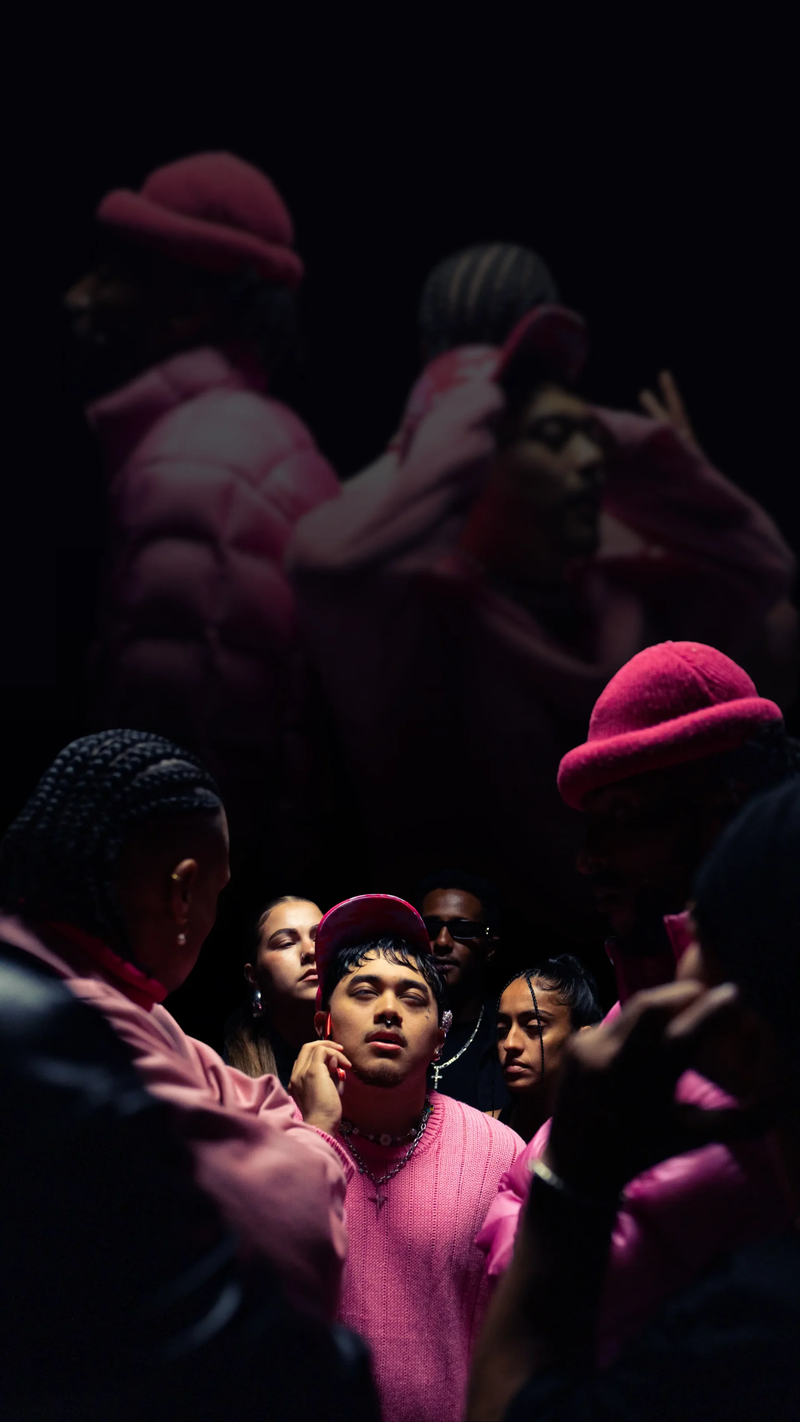
Interview by Passion DEEZ From the Studio Ghibli scores she grew up with to the club sounds she discovers behind the decks, Saïna brings different worlds into her music. The London-based singer-songwriter, DJ and producer draws on her Japanese and English roots, moving between alternative R&B, neo-soul and electronic music with vulnerability and personal discovery at the centre. Her storytelling extends into film, giving shape to the emotions and experiences she works through in her songs.On Hotel 555, the second chapter of her trilogy, Saïna explores the uncertain space between feeling broken and beginning to heal. Taking its name from a love hotel in Japan where she once staged a photoshoot, the project brings together an EP and accompanying short film to explore desire, escapism and the parts of ourselves we don’t always want to face. We caught up with Saïna to talk about her childhood soundtracks, taking control of her career, confronting her shadow and finding the thread between music and moving images. Step inside Hotel 555 and get familiar below.For anyone getting familiar with you for the first time, who is Saïna and what world are you inviting them into?I’m Saïna, a singer-songwriter and DJ. I also produce and direct videos. The themes I’ve been exploring in my songs over the past few years have been around vulnerability, resilience and transformation. For Hotel 555, part 2 of my trilogy, I delve into the world of the unconscious and the liminal space between feeling broken and beginning to heal.Growing up between Japanese and English cultures, how has that shaped your identity and the way you approach music?From a child, I was encouraged to practise piano or guitar daily. Grades never interested me, but what did was film scores and theme songs. In particular, Joe Hisaishi’s Studio Ghibli film scores moved me - the magical jazz tones and unforgettable melodies really resonated with me. Yearly trips to Japan until I was 12 fed that too, and later I discovered city pop - complex but catchy in a way that I still find mesmerising.London is so diverse - everywhere you go, you hear different sounds and genres; I’m still learning names of today. Living in such a metropolitan city, I feel free to create new blends of old and new from all around the globe.What did your time at the BRIT School teach you, and what did you have to unlearn once you began finding your own voice?Firstly, it taught me I wasn’t top of the class in music anymore. Haha, but for real, it was a challenge. Being surrounded by so much talent, many who’ve gone on to do amazing things, inspired me to become a better musician.There was nothing to “unlearn”, really, but once I’d finished school, I realised I had to be proactive and business-minded if I was to survive in the music industry. I tried a few managers, learnt a few lessons along the way, and realised that, for the time being anyway, I’m capable of managing my own career.Hotel 555 explores the space between death and rebirth. What was ending in your life when you began creating the project, and what was beginning?Out Of Sync (Part 1) is about the negative consequences of being out of sync with yourself. As doom and gloom as it sounds, it represented the ending of an old way of living, the silver lining being that I created art by “painting with my blood”.I still feel like I have these little deaths and transformations. I feel I handle pressure pretty well, but most of us experience breaking points of one kind or another - and they can be really challenging, but also an opportunity to explore something new in life.Hotel 555 sits in the space between those two phases.Why did a hotel feel like the right setting for this story?In 2024, I was introduced to the concept of ‘love hotels’ and found it very intriguing for such a quiet, modest culture. That year, I did a photoshoot with Calvin Ma at a love hotel in Japan purely to get a cheap ‘studio’. We discovered there are some interesting (to say the least) rooms around Tokyo. There was something about the anonymity and secrecy of these places that resembled escapism, desire or dreams. As the EP’s concept developed, the rooms slowly evolved into the emotional states on the path to some kind of transformation.The number 555 is often associated with transformation and change. What does it mean to you personally?Funny story, Hotel 555 was the name of the hotel we shot in. I thought it was a very mysterious name for a hotel, and it stuck with me. I’ve never been into angel numbers, but out of curiosity, I looked up the meaning of 555. And guess what? Transformation. Is that not a crazy coincidence? As soon as I decided this was to be the EP title, I started seeing the numbers everywhere - number plates, ticket machines, someone’s tattoo. I even have a whole photo album of the 555s I’ve spotted!As executive producer, how important was it for you to bring together the right team to help shape the sound and story of the EP?Each track was built block by block. For example, Desire was produced by Zuma., based in Tokyo, who sent me the production while I added the opening strings and some subtle layers as I recorded my vocals. Each producer, Matthew Sperring on Dreamscape; zuriel on Darkest Hours; Zuma. on Desire and For The Love; Jacob May on Merry Go Round, all helped me showcase a body of work that presents different sides to my Alternative Rnb sound. Collaboration is key for finding new angles on your own sound and concept. As an executive producer, I have ultimate control, but I remain open to the ideas and sounds the others bring to each song, selecting the elements to keep it cohesive.The project moves between alternative R&B, neo-soul and electronic music. Which artists, scenes or experiences helped shape its sonic language?AUDREY NUNA’s track ‘Mine’ influenced Desire - that electronic blend of Jersey Club and pop I’d been discovering through DJing. Darkest Hours pulls from Studio Ghibli’s emotional chord work and orchestral instruments, while the fourths give it a Japanese tone. These are just a couple of examples, but underneath it all, soul and Rnb have always been at the heart of my sound - from Amy Winehouse, Kali Uchis to Jhene Aiko…How does your experience as a DJ influence the way you build rhythm, atmosphere and transitions within your own records?It puts you in the listener’s shoes. You see how the room reacts, how tension builds. It’s also let me flip my own tracks into remixes, taking a song I poured my heart and soul into writing and turning it into a club-ready track for people to move to. In Darkest Hours, I wanted a sound you could picture live. Using all live drum kit sounds, I built tension through the bridge into a crescendo, where my vocals take the back seat and the production takes over. It carries me somewhere deeply heartfelt - I even found myself tearing up sometimes during the recording. There is a textural appeal to film, bouncing between different camera types, surveillance cameras, Super 8, and digital cameras. Why did you make this choice?Each look gives a different feel. Super 8 gives Dreamscape (shot in Okinawa) a distant, dreamlike quality. It explores only being able to see my lover when I close my eyes - a memory, daydream, a fantasy? Its imperfect zoom and focus suit that carefree, nostalgic feeling.Surveillance footage, TV zoom and wide lenses, all shot by Brett Bushell, add a Truman Show surrealism - the overbearing pressure from an outside world demanding more from you, again and again. The film is rooted in Jungian psychology and the idea of the “shadow.” When did you first encounter that concept, and why did it resonate with you?There’s a side to all of us that we don’t always want to look at. The parts of ourselves we repress, reject or don’t recognise as being us. In Jungian psychology, this is often referred to as our shadow.For me, it showed up most clearly in work or romantic relationships that weren’t right for me: a quick temper; a condescending edge. I would sometimes find myself acting out behaviours I used to see in my mum growing up, behaviours I was critical of. So why, when I was older, was I repeating this? I would ask myself. We absorb our environments and inherit behaviours and attitudes. It’s not until you accept you are sometimes behaving in ways you don’t like in others that you can correct those behaviours - or at least soften them. That’s where the shadow becomes important. It isn’t simply the “bad” part of ourselves; it’s the part we haven’t fully acknowledged or taken responsibility for. Sometimes what we most want to reject is what's asking to be understood. In Darkest Hours, I face mine directly. She’s a part of me I can’t simply erase, because if I were to do so completely, I would probably risk becoming somebody I don’t even recognise. What princess in Disney doesn’t have an imperfect companion to help her survive?What parts of yourself did you have to confront while making Hotel 555?Darkest Hours was the rawest of the tracks - confronting what triggers those unconscious, often destructive, habits. Merry Go Round went through many rewrites, partially because I didn’t want it to just complain about the 9-5 grind that made me unhappy at the time. This was my realisation that I was ready to make the jump and dive into the freelance world to do what I love most. Desire is about honesty with your own feelings, even when they're just lust, even when it's not someone you'd choose long-term. Every track carries that same bittersweet honesty.The film touches on performative glamour; how has that affected your relationships with people around you and your perception of yourself?For The Love is about those “friends” who only show up at certain parties, the smiles that only appear when you’re associated with certain people. I've been part of that illusion myself - trying to connect with people I didn't really understand or vibe with, and feeling out of place where I didn’t quite belong. This track is where I let it all go: where passion must come first.You co-directed the film and shot it entirely in Tokyo, while being based in London. What does each city represent within your creative world?That’s right. The short film plans were 90% built remotely with Calvin Ma and Brett Bushell - script, shot list, scheduling.London is home, for sure, but Japan, especially Yokohama and Tokyo, carries a childhood nostalgia. Going back tests my language and pulls me into a completely different rhythm. It’s almost an interesting social experiment when you put yourself in different environments. Stepping outside what you know is where creativity sparks. How did you translate the music into rooms, characters and visual symbols without simply illustrating the lyrics?Each track had its own visual image: Desire - hotel room; Dreamscape - Okinawa; Darkest Hours - a shadow; Merry Go Round - the metro; For The Love - a party. The challenge was to find a narrative thread between them. I was looking to create a stylised space that was slightly surreal, a little trippy, like in some of Gaspar Noé’s movies.Were there any scenes or ideas in the film that changed meaning once you saw them on screen?Saïna’s character in the bar scene shifted how I saw the characters. She's awkward at a cool party, sits alone with a cigarette, confined to her own thoughts. Naïve and vulnerable, she wonders if the room likes her, rather than whether she likes the room. They’re simply not her people!In contrast, her shadow fits right in with the crowd with her enticing, effortless charm. I intended Saïna to be exactly me but, after stepping back from planning and shooting, I realise I can be somewhere between the two. I suppose one of the things I like about acting in my own films - that freedom to drift between different versions of yourself and your character.Now that you have stepped out of the hotel and into the light, where does Saïna go next?I’m already plotting what’s next, but the general theme for Part 3 will be rebirth. Like a game or sequel, there’ll be easter eggs that stitch all 3 short films together. The first was screened on a projector in a small bar, the second in a small cinema, and I know I’ll be going even bigger for round 3. Already itching with excitement!Through Hotel 555, Saïna turns a close look at her own habits, relationships and desires into a story that reaches across music and film. That honesty extends to how she approaches her career, choosing where to put her energy and who to bring into her creative world. With the final chapter of her trilogy set to explore rebirth, she is already imagining how to take that story further. Follow Saïna for more on Hotel 555 and what comes next.